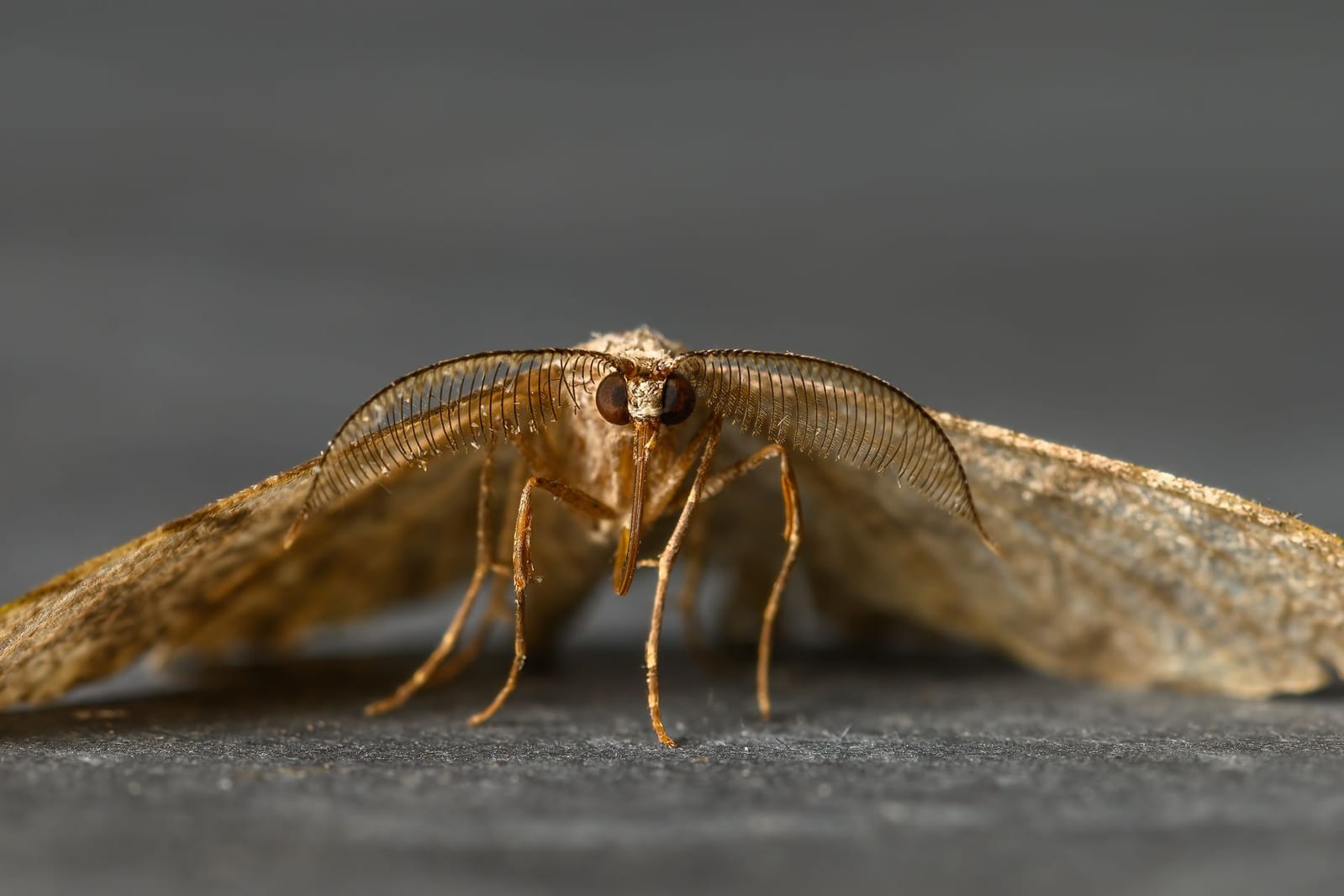
Park Slope's brownstones are largely family homes, and family households tend to hold more stored dry goods and more clothing and linens in long-term storage than a smaller apartment would — exactly the conditions both pantry moths and clothes moths need. Pantry (Indian meal) moths infest flour, cereal, pet food, nuts and other dry goods, often arriving already in a purchased package, then spreading to other stored food nearby.
Clothes moths are a separate problem entirely, targeting wool, silk, fur and other natural fibres rather than food. The closets, linen cupboards, and basement or garden-level storage rooms typical of this older housing stock — often less climate-controlled and less frequently disturbed than a modern apartment's storage — are exactly the dark, undisturbed conditions clothes moth larvae prefer.
Because pantry moths and clothes moths look similar but behave completely differently, correctly identifying which one is present is the first step — treating a clothes moth infestation with a pantry approach, or vice versa, won't resolve either problem.
Signs you have a moth control problem
- Small moths flying near the kitchen pantry, cabinets, or stored dry goods
- Webbing, larvae, or clumped material inside a flour, cereal, or pet food container
- Irregular holes in wool sweaters, coats, or other natural-fibre clothing in storage
- Larvae or silken webbing in closet corners, drawer edges, or folded stored fabric
- Moths or larvae found in a basement or garden-level storage room that's rarely opened
Why Park Slope sees this
Park Slope's family-dense brownstone households tend to hold more stored dry goods and more natural-fibre clothing in long-term storage than smaller households, which raises exposure to both pantry and clothes moths.
The closets, linen cupboards and basement or garden-level storage rooms common to this older row-house housing stock are the kind of undisturbed, less climate-controlled space clothes moth larvae prefer.
Pantry moths and clothes moths require different identification and treatment, and misidentifying one for the other is a common reason a first attempt at treatment doesn't resolve the problem.