Skip to content
Mon–Fri & Sun: 8am–6pm · Closed Saturday
ES
Park Slope Pest Control Licensed NYC Exterminators

Mosquito & Tick Control in Park Slope

Last updated: 12/06/2026

Park Slope's edge along Prospect Park brings mosquitoes and ticks into the neighbourhood from the park's green space every warm season, and standing water collecting in brownstone backyards, basement airshafts and blocked gutters gives mosquitoes somewhere to breed close to the house — we treat both the harbourage brought in from the park and the standing water sustaining a local population.

Get Your Free Quote

Or call now: (347) 801-8740

Licensed
& insured NY exterminators
4.9★
332 Google reviews
All 5 Boroughs
Neighbourhood-level NYC coverage
Guaranteed
We return until it's resolved
NY DEC License 15739

Park Slope sits directly against Prospect Park, and that boundary is the single biggest driver of mosquito and tick pressure in the neighbourhood. Ticks move out of the park's grass and brush onto pets, clothing and skin on blocks closest to the perimeter, while mosquitoes breed anywhere water sits still for more than a few days — including well inside the built-up blocks away from the park itself.

Brownstone backyards, narrow basement airshafts and light wells common to this row-house construction are easy to overlook as breeding sites: a blocked drain, a forgotten container, or a low spot that holds rainwater after a storm is all a mosquito needs. Because these row houses sit close together with shared or adjoining yard space, one property's standing water can sustain mosquito pressure for the whole block.

The season here runs from late spring through early autumn, tracking warm, humid weather, and it's worse in years with a wet spring. Treatment has to address both ends of the problem — the park-edge tick and mosquito pressure moving in from Prospect Park, and any standing water in yards, airshafts or gutters that's breeding mosquitoes locally.

Do I really need professional mosquito and tick control in New York City?

The CDC reports that West Nile virus is the leading cause of mosquito-borne disease in the contiguous United States, spreading to people through the bite of a mosquito that has fed on infected birds. Most people infected develop no symptoms, but a small share go on to serious illness affecting the nervous system — which is why summer mosquito reduction matters for New York households. (CDC — About West Nile Virus)

The CDC advises that the foundation of mosquito control is removing standing water: once a week, empty and scrub, turn over, cover or throw out any item that holds water — buckets, planters, toys, birdbaths, flowerpot saucers or trash containers — because mosquitoes lay eggs near water. In a NYC backyard or courtyard the real breeding sites are clogged drains, saucers and forgotten containers. (CDC — Mosquito Control at Home)

The EPA explains that eliminating standing water in rain gutters, old tyres, buckets and other containers is the first and most cost-effective step in mosquito control, noting that egg- and larva-stage interventions are generally the most effective, least costly way to control mosquitoes — so removing breeding sites should always come before spraying adults around a property. (EPA — Success in Mosquito Control: An Integrated Approach)

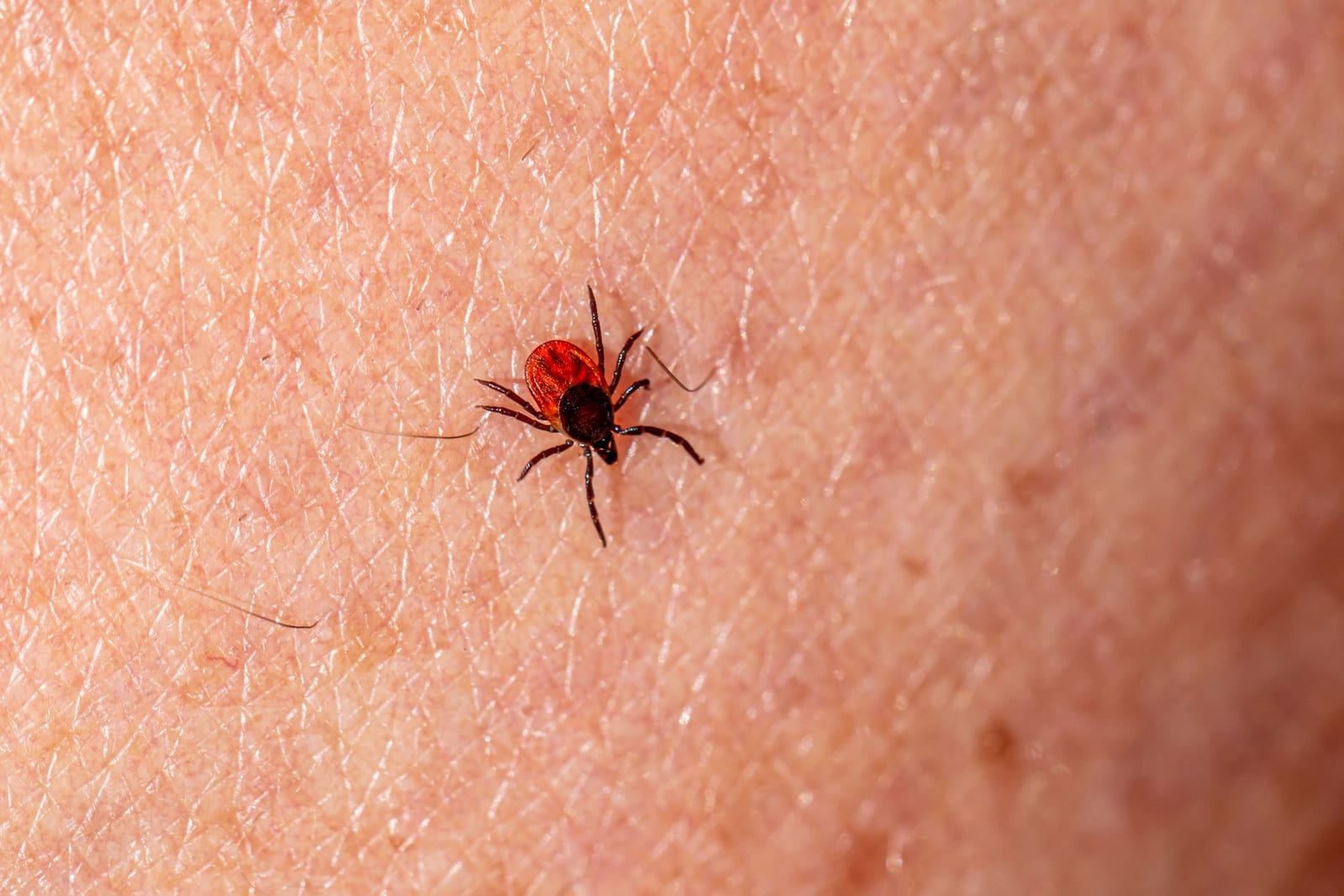
For ticks, the CDC notes the bacteria that cause Lyme disease spread through the bites of infected blacklegged (deer) ticks, which live in grassy, brushy or wooded areas, and that most cases occur in the Northeast — the region New York sits in. It recommends EPA-registered repellents with DEET, picaridin, IR3535 or oil of lemon eucalyptus, clothing pre-treated with 0.5% permethrin, and prompt tick removal. (CDC — Preventing Lyme Disease)

Why source reduction comes before spraying

ApproachWhat it targetsWhat the agencies say
Source reduction (eliminate standing water)Eggs and larvae — stops mosquitoes before they hatchEPA: egg/larva interventions are the most effective, least costly control, and the first tactic
Larvicide treatmentLarvae in water that cannot be drainedEPA: larvicide treatment of breeding habitats reduces nearby adult numbers
Adult spraying (adulticide)Flying adults already presentEPA lists adult control last — after habitat removal, barriers and larval control

How much does mosquito & tick control cost in NYC?

$50–$2,500

Per-visit: $80–$150. Per-season average: $350–$1,000 (property-dependent; quarter/half-acre seasonal average ~$500). Overall reported range: $50–$2,500. Larvicide-only visits: $80–$120.

Per-visit $80–$150 per visit
Per-season $350–$1,000 per season

US national figure — NYC typically runs higher.

Market range — not our quote

This is a market range synthesised from published cost guides — not a quote from this provider. The actual price depends on an in-person or photo-based inspection.

US national, yard/property-based figures — most NYC pest-control demand is apartment/building interior, so these outdoor-yard-oriented ranges apply best to NYC rowhouse/backyard or small-business-patio contexts, not typical apartment units. No NYC-specific mosquito guide found.

What drives the price

  • Property/yard size
  • Treatment method (adult spray vs larvicide briquettes vs misting system)
  • Single visit vs full-season recurring plan (every ~21 days, April–September)
  • Contract length
Get an exact quote

Signs you have a mosquito & tick control problem

  • Mosquito bites accumulating in the backyard or on a stoop in the evening, even without visiting the park
  • Visible standing water in a backyard container, drain, gutter, or basement airshaft after rain
  • Ticks found on pets or family members after time in or near Prospect Park
  • Increased mosquito activity on blocks closest to the park boundary compared to interior blocks
  • Mosquito activity that persists into cooler months in a mild autumn

Why Park Slope sees this

Park Slope's direct boundary with Prospect Park is the defining factor in the neighbourhood's mosquito and tick pressure, particularly on blocks closest to the park edge.

Backyard and basement airshaft standing water in this brownstone housing stock is a local breeding source distinct from the park-edge pressure, and treating one without the other leaves a gap.

The mosquito and tick season here runs roughly late spring to early autumn, tracking warm, humid weather typical of the NYC metro area.

Simple, transparent process

Our Mosquito & Tick Control Process

  1. 1

    Property and yard inspection

    We check the backyard, basement airshaft, gutters and any standing water source on the property, along with proximity to Prospect Park as a source of park-edge pressure.

  2. 2

    Standing-water treatment

    Larvicide applied to any standing water that can't simply be drained or removed, stopping mosquitoes at the breeding stage rather than just spraying adults.

  3. 3

    Barrier treatment

    Residual treatment to backyard vegetation, fencing and other harbourage where adult mosquitoes and ticks rest during the day.

  4. 4

    Tick-zone treatment

    For properties closest to the park edge, targeted treatment of grass and brush margins where ticks are most likely to be picked up.

  5. 5

    Seasonal follow-up

    Repeat visits through the warm-weather season keep pressure down as new adults emerge.

Mosquito & Tick Control — FAQs

How much does mosquito & tick control cost in NYC?

Market rates for mosquito & tick control in NYC typically run $50–$2,500, based on published cost guides (not this provider's quote). Per-visit: $80–$150. Per-season average: $350–$1,000 (property-dependent; quarter/half-acre seasonal average ~$500). Overall reported range: $50–$2,500. Larvicide-only visits: $80–$120. Actual price depends on an in-person or photo-based inspection.

Do I need mosquito treatment if I never go into Prospect Park?

Yes, if you have a backyard, airshaft or any standing water source — mosquitoes bred locally don't need the park, and Park Slope's brownstone yards and light wells are common breeding spots.

Can ticks really get onto my property from the park?

On blocks near the Prospect Park boundary, yes — ticks move from park grass and brush onto pets and people, and can be carried into a yard on clothing or fur.

When is mosquito and tick season in Park Slope?

Roughly late spring through early autumn, peaking in the warmest, most humid months, with activity extending later into a mild autumn.

What can I do myself between treatments?

Empty or cover any standing water in backyard containers, keep gutters clear, and check pets for ticks after time in or near Prospect Park.

Need mosquito & tick control in Park Slope?

Licensed, insured, local NYC exterminators. Call to schedule.

Call Now Free Quote