Wildlife removal in Gowanus: what to know
Gowanus is a former industrial pocket of Brooklyn wrapped around the Gowanus Canal — a federal Superfund site since 2010. Old warehouses, converted lofts, auto shops and the row houses on its Park Slope–facing streets sit over a high water table and a century of below-grade plumbing, exactly the damp, drain-heavy conditions the large oriental cockroaches New Yorkers call 'water bugs' rise up into from basements and floor drains.
The canal corridor and the neighbourhood's low, wet ground drive some of the heaviest rodent pressure in this part of Brooklyn — rats travel the canal banks, sewer lines and vacant industrial lots and push into adjoining residential blocks. Ongoing large-scale development from the 2021 rezoning disturbs established rat harbourage, which frequently sends populations searching for new shelter in nearby homes and businesses.
Ground-floor and basement units in Gowanus's converted industrial buildings and older row houses are the most exposed — old masonry, unsealed utility penetrations and moisture from the high water table give both rodents and water bugs the entry points and damp harbourage they need year-round.
How much does wildlife & squirrel removal cost in Gowanus?
$150–$600
Squirrel removal: $200–$600 (typical $250–$450, avg ~$300). Raccoon removal: $300–$450 avg, or $150–$300 per animal for trap-and-release. Exclusion vent installation: $300–$450 each. One-way mesh exclusion barrier: $10–$25/linear foot.
| Squirrel removal | $200–$600 one-time |
| Raccoon removal | $150–$450 one-time |
| Exclusion vent installation | $300–$450 per vent |
US national figure — NYC typically runs higher.
Market range — not our quote
This is a market range synthesised from published cost guides — not a quote from this provider. The actual price depends on an in-person or photo-based inspection.
US national — NYC typically higher. No NYC-specific wildlife-removal cost guide found despite NYC's well-documented raccoon/squirrel-in-building problem — a genuine gap versus the bed bug/rat/roach guides.
What drives the price
- Species
- Number of animals
- Location (open yard vs attic/wall void)
- Cleanup/repair needed after removal (droppings, insulation, entry-point damage)
Signs you need wildlife removal
- Scratching, thumping or movement in the attic or roof space, especially at dawn or dusk
- Chewed or torn entry gaps around chimney flashing, roof vents, or cornice detailing
- Droppings or nesting material in the attic, chimney, or under a backyard deck or shed
- Squirrels or raccoons seen repeatedly entering or exiting the same roof-line gap
- Noise or activity that begins shortly after a neighbouring building reports its own wildlife problem
How we treat wildlife removal in Gowanus
The decorative cornices, dormers and roof detailing common to Park Slope's late-19th and early-20th-century brownstones give squirrels and raccoons far more to climb and grip than a plain modern facade would. Chimneys, roof-line gaps and attic vents on these older buildings are common entry points, and once wildlife is in the roof or attic space, the same shared party walls that let pests move between units let squirrels and raccoons travel too.
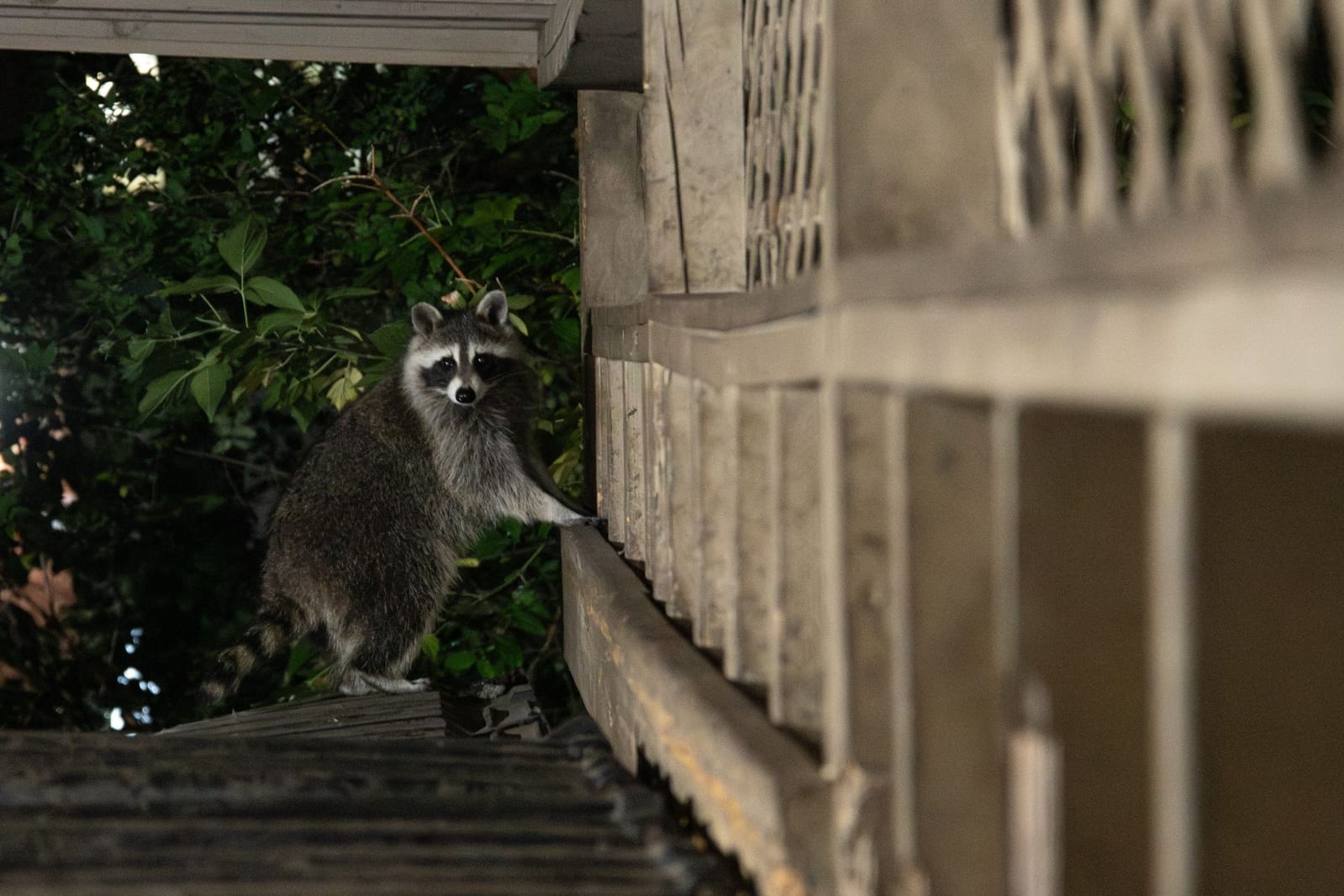
Basement-level garden apartments and backyard structures aren't immune either — raccoons will den under a porch, deck or garden shed if given the chance, particularly on blocks backing onto green space. The neighbourhood's edge along Prospect Park is a steady source of wildlife pressure, with squirrels and raccoons moving from the park onto adjacent blocks in search of shelter, especially in autumn and late winter denning season.
Local landmarks & coverage
We serve all of Gowanus and the surrounding Brooklyn area — including Gowanus Canal, Fourth Avenue, Third Avenue, Whole Foods Gowanus, Thomas Greene Park — across ZIP codes 11215, 11217, 11231.