Stinging insect removal in Bushwick: what to know
Bushwick's older multi-family walk-ups and converted industrial spaces have the shared walls, voids and aging plumbing that let cockroaches and mice move freely between units.
High residential density and busy commercial strips keep food-source pressure high, and converted loft buildings can harbour 'water bugs' rising from basements and drains.
Tenant turnover in the rental stock makes bed bugs a recurring concern for renters and landlords.
Signs you need stinging insect removal
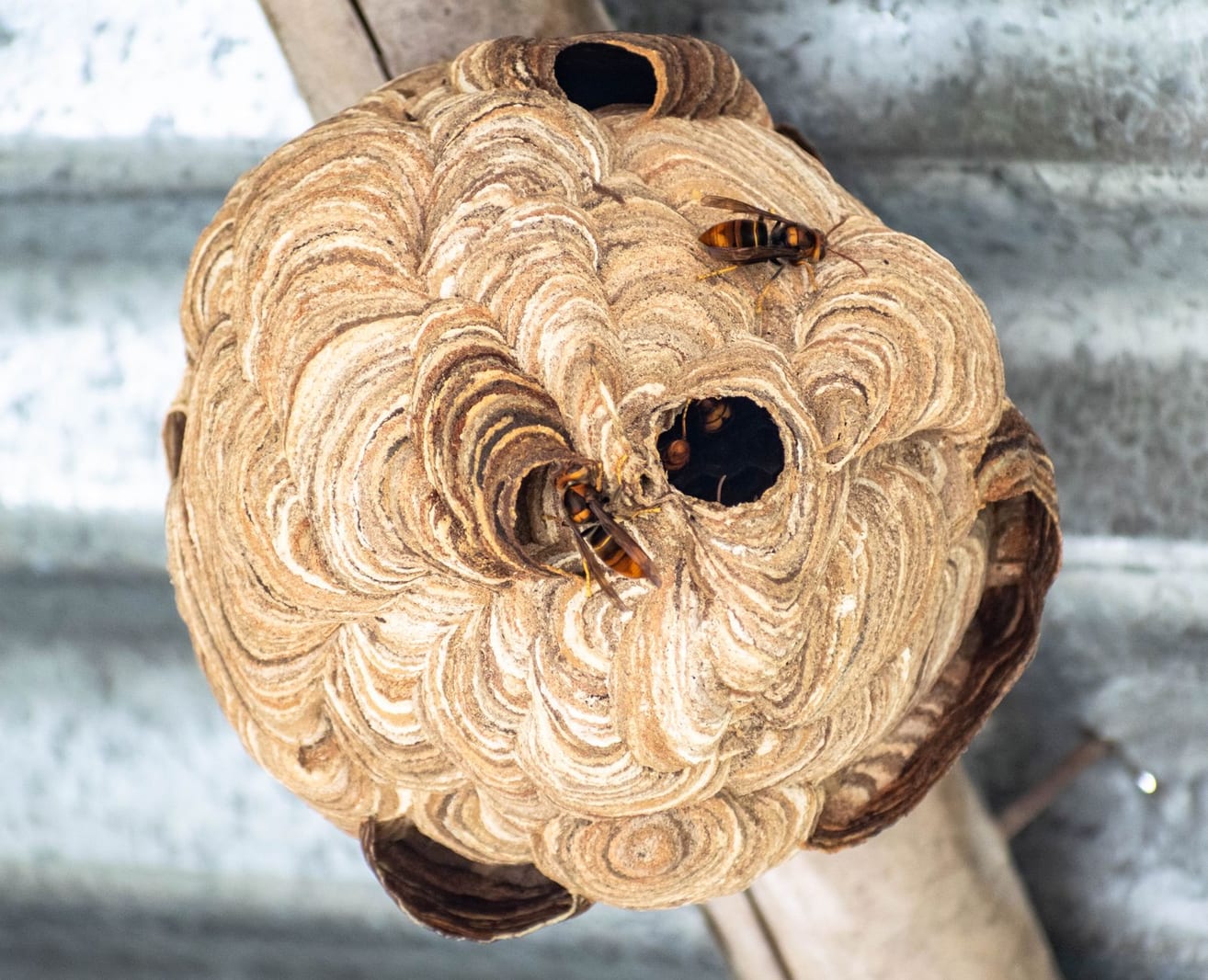
- A visible nest under eaves, in a wall void, or near a door or window
- Steady wasp or hornet traffic to one spot on the building
- Aggressive stinging insects around a walkway or entrance
How we treat stinging insect removal in Bushwick
An active wasp or hornet nest near a doorway, window or walkway is a genuine hazard — especially for anyone with an allergy. Yellow jackets and hornets are aggressive when their nest is disturbed, and DIY removal often triggers exactly that.
We locate and safely eliminate the nest, including nests tucked into wall voids, eaves, soffits and high on buildings, then remove or treat it so the colony doesn't rebuild. Because active nests are dangerous, we treat them as a priority.
Local landmarks & coverage
We serve all of Bushwick and the surrounding Brooklyn area — including Maria Hernandez Park, Knickerbocker Avenue, The Brooklyn Mirage — across ZIP codes 11221, 11237, 11207.